The Swan and its role in Bradford’s history
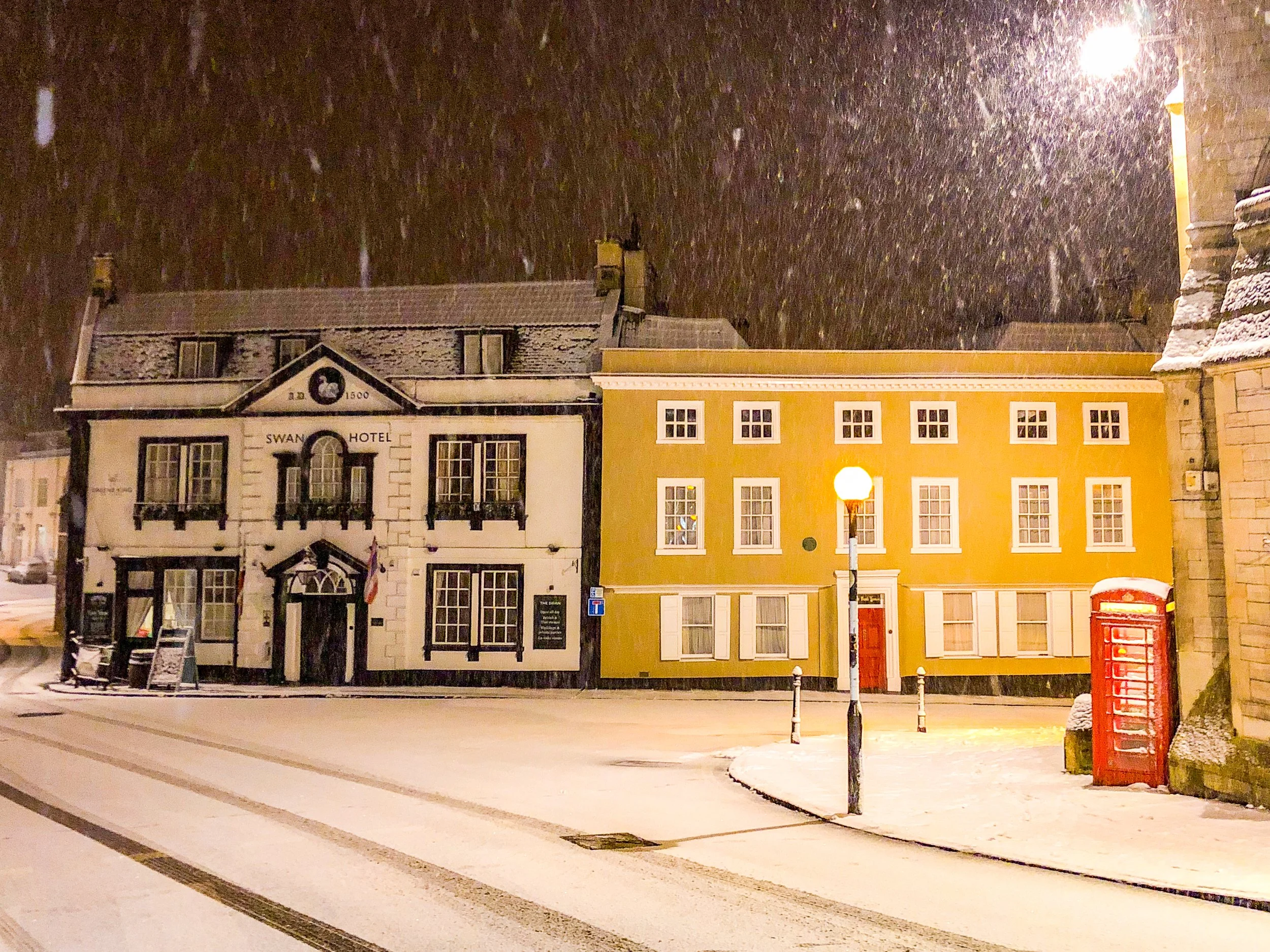
As rumour and misinformation continue to surround the fate of The Swan, Ivor Slocombe explores the inn’s important position in Bradford’s political and social history
Much has been written about the Swan Hotel (for many decades called the Swan Inn), its buildings and owners. But this has neglected the important role the Swan played in the late 18th and 19th centuries as the very hub of political and social activities in Bradford. It is, perhaps, symbolic that when the Town Commissioners were established in 1839, their control was over an area defined as being of one mile radius from the centre of Bradford, i.e. the Swan Hotel.
Before the coming of the railways, travel across the country was by stage coach on the turnpike roads. This necessitated a large number of coaching inns strategically placed for breaks and the changing of horses. The Swan was one of these. It was well suited for this purpose as, according to the sale particulars in 1734, it had stabling for 30 horses.
There are references to a number of particular coach services. In 1794 there was a coach from Warminster to Bristol calling at the Swan. The fare from Bradford to Bristol was 4s 6d (22½p) for an inside seat and half price for outside. In 1797 there was a light coach leaving Westbury every Monday, Wednesday and Saturday calling at the Swan and arriving at the Lamb Inn, Bath, at 10am. The inside fare was 2s (10p)and outside 1s (5p). A new and much more adventurous service was introduced in 1834. This was a four-seater coach, which left the Swan at 4.30 every afternoon except Sunday. It travelled through the night and arrived in London at the Saracen’s Head, Snow Hill, early the next morning. An inside seat cost £1 8s (£1.40). For anyone who could endure sitting outside, the fare was only 12s (60p).
Before the town hall was built in 1855, the Swan with its assembly room filled the gap for all formal meetings. The right to vote in the 19th century depended partly on a property qualification. This was complicated and there were frequent disputes. To settle these, a number of Revising Barristers were appointed who held courts throughout the country. Anyone could appear at these to claim they should be on the roll or to object to someone on the roll whom they considered did not have the right qualification. The Wiltshire barrister held a meeting every September in Bradford at the Swan. In 1853 plans were published to enclose Trowle Common. The Commissioner held a meeting at the Swan to hear objections.
In the 18th century several associations were formed across the country to meet the cost of prosecuting offenders and to reward those who had apprehended them. The Bradford members met at the Swan in 1774 to agree how much those rewards should be. For example, 40s (£2) would be given to those capturing horse stealers, sheep stealers and shoplifters.
In 1834 there was a meeting of Bradford inhabitants to discuss the proposal by the Great Western Railway to build a railway line to Bath and Bristol. They decided there would be a great advantage in this but wanted the line to pass as closely as possible to Bradford. They suggested that the line from Reading to Bristol ought to pass to the south of the Kennet and Avon Canal, which would give easier access from places like Bradford and Devizes.
There was also some ecclesiastical use. Every three years or so, the Archdeacon’s Registrar toured the district to answer questions and give help to solve problems regarding the proving of wills, letters of administration and access to the goods of intestates, together with any other ecclesiastical business. In Bradford, he set up his office in the Swan.
Commercially, the main use was as an auction house. All through the 19th century virtually every property auction was held at the Swan. More surprising was a medical connection. In 1744 Mr Grant from Reading, an oculist, advertised that he would be available at the Swan on 9 July to give free advice to anyone with defects of sight. More unusual, in 1866 Mr Young, a foot doctor, was there to cure corns in which he was a specialist. He came with recommendations from some Bradford doctors including Mr Adye, the surgeon.
If an association wanted to hold its annual or other celebratory dinner, THE place to go was the Swan. In 1847 the Chippenham Agricultural Society and in 1859 the Melksham Agricultural Society held their annual ploughing match in a field just outside Bradford. This was followed by a dinner at the Swan for all competitors. The same happened with the annual roots (horticultural) show in 1884. The dinner was attended by 50-60 people under the chairmanship of H Wilkins. Other associations included the Bradford Freemasons’ Unity Lodge, the Christ Church choir, the Bradford Boat Club and the Licensed Victuallers Association.
There were two ‘royal’ occasions. In 1798 the Bradford volunteer companies met at Bradford Leigh in honour of the anniversary of the King’s coronation. There they went through a form of military review under the command of Mr Hobhouse. The companies were composed of ‘individuals of the most respectable conditions of life’. They then adjourned to the Swan to enjoy a meal paid for by the officers. This consisted of two whole bucks, several rounds of beef, ham and chicken. The evening finished with the singing of ‘many humorous and excellent glees’.
One might be hard pressed to say what royal occasion prompted huge celebrations across the country in 1789. It was actually not an anniversary. George III suffered periods of madness (although we now know that he was actually suffering from porphyria). He had a particularly bad bout lasting several months in 1788-1789. He then recovered and that was what was being celebrated. Bradford was not left out. For the general public an ox and four sheep were roasted and served together with an immense quantity of bread and several hogsheads of beer. There was an elegant dinner at the Swan for the ‘principal inhabitants’. For this the Swan was decorated with an excellent figure of Britannia displaying a medallion of the King with these lines:
A King restor’d! for whom a Nation sigh’d
His people’s glory! And Britannia’s pride
In the evening there were fireworks, bonfires and illuminations on the grandest scale.
Somewhat surprising is the level of political activity and protest in Bradford. At the beginning of the 19th century there was considerable pressure throughout the country for parliamentary reform – extending the right to vote and a fairer distribution of parliamentary seats – which in 1832 led to the Great Reform Act. The campaign was centred on the Political Union based in Birmingham with branches across the country. Bradford had such a Union. William Heale, the owner of the Swan, was sympathetic to the cause and allowed the Union to have its headquarters in the assembly room, and, in fact, became chairman. In May 1832, when the House of Lords rejected the Reform Bill, a general meeting was called in Bradford which resulted in one of the largest gatherings ever held in the town. They resolved to meet every evening until the Bill was passed. In June the Lords finally passed the Bill and the news caused ‘the most lively joy in Bradford’. Canons were fired, flags were suspended from windows and houses were decked in laurels. The church bells were rung. There was a proposal to give every poor person a portion of meat, bread and beer but it is not clear whether this actually happened. Certainly the Bradford celebrations were notable enough to be reported in a national newspaper, The Sun.
With the future of the Swan still apparently uncertain, it is an appropriate time to remember and record the important role it has played in Bradford’s history.